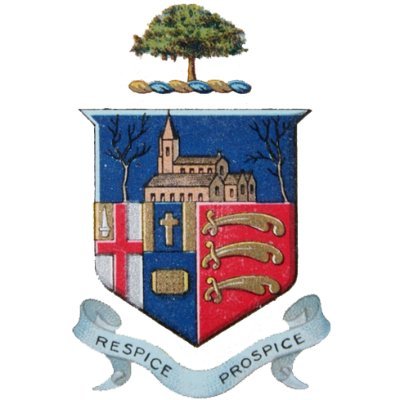
In 1900, under the London Government Act of 1899, the old SN parish was united with South Hornsey in Stoke Newington Metropolitan Borough
Back to themes
South Hornsey
Local Authority
Posts about South Hornsey as an area, district identity, and its institutions.
162 (<1%) posts currently match this theme.
Note: Theme classification is AI-enabled and imperfect, so some posts here will be misclassified and some relevant posts may be missing.
Filter posts within this theme by keyword, date range, image presence, or sort order.
Show theme trend over time Hide theme trend
Theme trend
Matches over time
Showing all years in this theme.
Showing first 100 posts…
In 1900, under the London Government Act of 1899, the old SN parish was united with South Hornsey in Stoke Newington Metropolitan Borough
@maryonthegreen I know but to the best of my knowledge the parish boundaries didn’t extend beyond those ones. South Hornsey parish…
@LynRennick Thanks, though wasn't the church technically in South Hornsey detached rather than Newington Green?
1889 - Buying Clissold Park: City Corp. £47K Met. Board of Works £25K Stoke Newington £10K, South Hornsey £6K Hackney £5K Islington £2.5K
The need to raise £25K started a year long heated negotiations with the parishes of Islington, Hackney, South Hornsey and Stoke Newington.
Town Hall Approach between Albion Rd & Milton Grove denotes the location of SN’s 1st Town Hall on Milton Grove, originally South Hornsey’s.
Interesting. South Hornsey Parish had a few detached sections in Stoke Newington till 1900 when they were absorbed into the new SN Borough https://x.com/ConorMuller/status/888074080066428929
@jonburkeUK @BBCCountryfile @WildWoodberry Pre-1900 South Hornsey Parish had a few detached sections within Stoke Newington. See the ward map.
@steveone111 Yes. It was originally South Hornsey’s Town Hall and when it became part of SN Borough it was the used by SN. Too far from the centre.
Note various detached sections of South Hornsey parish. These were absorbed into the newly created Metropolitan Borough of SN in 1900. https://x.com/HistoryOfStokey/status/927198807330377728
The fact half of Clissold Park was in South Hornsey, and therefore outside the boundaries of the ‘metropolis’ created a major obstacle when the Metropolitan Board of Works was asked in 1886 to purchase the park for the public and save it from development. Started a 2-year saga.…
The fact half of Clissold Park was in South Hornsey, and therefore outside the boundaries of the ‘metropolis’ created a major obstacle when the Metropolitan Board of Works was asked in 1886 to purchase the park for the public and save it from development. Started a 2-year saga. https://x.com/historyofstokey/status/951415763541397504
One of several Stoke Newington Borough street nameplates that are still around. The Metropolitan Borough was created in 1900 along the boundaries of the old Stoke Newington parish and detached parts of South Hornsey parish. Amalgamated into Hackney along with Shoreditch in 1965.
The boundaries of the Metropolitan Borough of Stoke Newington, which was created in 1900 and absorbed into Hackney in 1965. The borough’s boundaries were mainly those of the old Manor plus sections of South Hornsey parish in the south and north-west. A10 was the eastern border.
A foundation stone is the sole remnant of the South Hornsey Town Hall in Milton Grove, which became the first Town Hall of the new Metropolitan Borough of Stoke Newington in 1900. Parts of South Hornsey were absorbed into the new borough. The Church St Town Hall was built 1935-7
Clissold Park cost £11,000,000 in today’s money. Eventually that amount was raised from: The Metropolitan Board of Works The Charity Commissioners Stoke Newington South Hornsey Hackney Islington https://x.com/historyofstokey/status/997397880578236418
The remnants of a painted street sign in Wilberforce Road (N4) when the street was in the parish of South Hornsey. This part of South Hornsey was absorbed into the newly formed Metropolitan Borough of Stoke Newington in 1900.
@highamnews Stoke Newington’s first Town Hall in Milton Grove was originally South Hornsey’s
@highamnews Btw, the fact the western half of Clissold Park was in South Hornsey meant the Metropolitan Board of Works wouldn’t consider purchasing it for the public as SH wasn’t in boundaries of the metropolis. This made the purchase plan very complicated for J. Beck and the ca…
@highamnews Btw, the fact the western half of Clissold Park was in South Hornsey meant the Metropolitan Board of Works wouldn’t consider purchasing it for the public as SH wasn’t in boundaries of the metropolis. This made the purchase plan very complicated for J. Beck and the campaigners.
@N4StroudGreen @highamnews Interestingly the ward also included the two detached portions, which historically were detached portions of the parish of Hornsey and later on the local administrative district of South Hornsey.
This similar sign in Wilberforce Road (Stoke Newington N4), shows what the original Victoria Grove would have looked like when South Hornsey was also included https://x.com/historyofstokey/status/1022960166071873536?s=21 https://x.com/HistoryOfStokey/status/1036666596654231552
In 1900, under the London Government Act of 1899, the old Stoke Newington parish was united with South Hornsey to form the Metropolitan Borough of Stoke Newington. https://x.com/HistoryOfStokey/status/1054063623981674496
A faded street sign in Shakspeare Walk opposite the Shakespeare pub from a time when the street was called Shakespeare Road and was in an enclave of South Hornsey Parish, one of a few in St Mary Parish Stoke Newington. These detached sections added to the new SN Borough in 1900
@VictorianLondon @highamnews Thanks! That area of SN was one of the South Hornsey Detached sections within SN. One for the local history pub quiz! The hardcore version!
1884 South Hornsey Local Board drain cover in Finsbury Park Road/Somerfield Road N4. The Brownswood Park area along with other sections of South Hornsey north of Newington Green were incorporated into the Metropolitan Borough of Stoke Newington which was created in 1900.
@RobertElms It’s position is where the boundary was between St Mary Stoke Newington parish and South Hornsey. 1790 was the year Johantan Hoare had the house built. Originally named Paradise House.
@W_Bradley @Hackneycyclist @hackneygazette @binny_uk @realnickperry Here’s a map of the former Metropolitan Borough of Stoke Newington which was based on the boundaries of the parish and detached sections of South Hornsey. Given it no longer exist you could rightly argue it’s ir…
@W_Bradley @Hackneycyclist @hackneygazette @binny_uk @realnickperry Here’s a map of the former Metropolitan Borough of Stoke Newington which was based on the boundaries of the parish and detached sections of South Hornsey. Given it no longer exist you could rightly argue it’s irrelevant now that SN is ‘merely’ a district in Hackney.
Stoke Newington Borough’s first Town Hall was in Milton Grove from 1900 to 1937. It was originally South Hornsey’s Town Hall. Detached sections of South Hornsey, mainly in south SN were incoporated into the newly formed Metropolitan Borough of Stoke Newington in 1900. https://t.…
Stoke Newington Borough’s first Town Hall was in Milton Grove from 1900 to 1937. It was originally South Hornsey’s Town Hall. Detached sections of South Hornsey, mainly in south SN were incoporated into the newly formed Metropolitan Borough of Stoke Newington in 1900. https://x.com/soxgnasher/status/1110643697664868352
@LynRennick @ghostsigns @realnickperry If that’s the case, then it’s the only such surviving painted sign in that style I’ve seen and it’ll be consistent with similar painted street signs in south SN that have South Hornsey below the street name.
Similar signs with tne parish name below the street name surive in Finsbury Park Road and Wilberfoce Road https://x.com/HistoryOfStokey/status/980790868444680192 https://x.com/HistoryOfStokey/status/1022960166071873536 This section of South Hornsey Parish was incorporated into the newly formed Borough of Stoke Newington in 1900. https://t.co/…
Similar signs with tne parish name below the street name surive in Finsbury Park Road and Wilberfoce Road https://x.com/HistoryOfStokey/status/980790868444680192 https://x.com/HistoryOfStokey/status/1022960166071873536 This section of South Hornsey Parish was incorporated into the newly formed Borough of Stoke Newington in 1900. https://x.com/HistoryOfStokey/status/1114513458815488004
Multiple layers are barely visible in this 19th century painted street sign in Brighton Road. Here's my digital reconstruction. This section of South Hornsey Parish was incorporated into the newly formed Borough of Stoke Newington in 1900.
Multiple layers are barely visible in this 19th century painted street sign in Victorian Grove (formerly Victoria Grove). Here's my digital reconstruction. This section of South Hornsey Parish was incorporated into the newly formed Borough of Stoke Newington in 1900.
Multiple layers are barely visible in this 19th century painted street sign in Shakspeare Walk (formerly Shakespeare Road). Here's my digital reconstruction. This section of South Hornsey Parish was incorporated into the newly formed Borough of Stoke Newington in 1900.
Just spotted a South Hornsey Local Board (SHLB) curb inlet from 1878 in Mountgrove Rd/Wilberforce Rd, N4. This part of South Hornsey, along with others north of Newington Green were incorporated into the Metropolitan Borough of Stoke Newington when it was formed in 1900.
Just spotted a South Hornsey Local Board (SHLB) curb inlet from 1878 in Queen’s Drive/King’s Crescent, N4. This part of South Hornsey, along with others north of Newington Green were incorporated into the Metropolitan Borough of Stoke Newington when it was formed in 1900.
'Borough of Stoke Newington' street sign in Mountgrove Road N5. Originally in South Hornsey Pairsh, this part of South Hornsey, along with others north of Newington Green were incorporated into the Metropolitan Borough of Stoke Newington when it was formed in 1900.
My digital restoration of a painted street sign in Finsbury Road N4/Mountgrove Road N5. This part of South Hornsey, along with others north of Newington Green were incorporated into the Metropolitan Borough of Stoke Newington when it was formed in 1900.
@urbanpastoral There are a few of this ghost signs along the former border between the parishes of Stoke Newington and South Hornsey. In some cases it’s clear the sign was repainted without South Hornsey (after 1900), though it’s still visible sometimes underneath.
Two Stoke Newington Borough boundary markers from 1901 at the junction of Blackstock Rd, N4 and Mountgrove Rd, N5. The Brownswood Park area, and a large area north of Newington Green were part of the South Hornsey Local Board. Absorbed into the newly formed SN Borough in 1900.
@alxndrlov @JeyyLowe Hi. Curious to know who ‘they’ were and what happened in 1890. I wasn’t aware plans to form the metropolitan boroughs started that early. Also, SN’s first Town Hall was originally South Hornsey’s and located in Milton Grove. The one in Church St was built 19…
@alxndrlov @JeyyLowe Hi. Curious to know who ‘they’ were and what happened in 1890. I wasn’t aware plans to form the metropolitan boroughs started that early. Also, SN’s first Town Hall was originally South Hornsey’s and located in Milton Grove. The one in Church St was built 1935-7.
Spotted today only the 9th vintage street nameplate in this style in Stoke Newington. Adolphus Rd, in the Brownswood Park area near Finsbury Park, was originally in the parish of South Hornsey. Parts of South Hornsey were incorporated into the new Stoke Newington Borough in 1900.
I was alerted today to an impressive 1887 South Hornsey parish boundary marker in Palatine Avenue. I stumbled upon a smaller one closer to SN Road on my way in. Parts of South Hornsey (north of Newington Green) were incorporated into the new Stoke Newington Borough in 1900.
Stoke Newington Borough's first Town Hall in Milton Grove. Originally the Town Hall of the South Hornsey Local Board, which had detached sections it administered within the parish of Stoke Newington. Those were incorporated into the newly formed SN Borough in 1900.
A foundation stone is the sole remnant of Stoke Newington’s first Town Hall in Milton Grove. It was originally South Hornsey’s. Detached parts of the South Hornsey Local Board within SN were absorbed into the new SN borough in 1900. The Town Hall in Church St was built 1935-7
Apart from three detached sections north of Newington Green, the entire Brownswood Park area that borders Finsbury Park abs was within South Hornsey, was also incorporated into Stoke Newington Borough, which stretched as far as Brownswood Road and Seven Sisters Road. https://t.c…
Apart from three detached sections north of Newington Green, the entire Brownswood Park area that borders Finsbury Park abs was within South Hornsey, was also incorporated into Stoke Newington Borough, which stretched as far as Brownswood Road and Seven Sisters Road. https://x.com/HistoryOfStokey/status/1173112007651930112
Remnants of the South Hornsey Local Board, which governed Brownswood Park and exclaves within Stoke Newington north of Newington Green can be seen in ‘ghost’ street signs like this one in Wilberforce Rd, N4. Most of the South Hornsey area was absorbed into SN Borough in 1900.
A remnant in 155-169 Manor Road of the Metropolitan Borough of Stoke Newington. The small borough was created in 1900 along the boundaries of the ancient parish of Stoke Newington and the South Hornsey Local Board. It was absorbed along with Shoreditch into Hackney in 1965.
Wilberforce Road looking north with Finsbury Park Methodist Church in the distance. The road was in the Brownswood Park area, which was within the South Hornsey Local Board in the 19th century. The area was incorporated into the new Metropolitan Borough of Stoke Newington in 1900
Finsbury Park Road. The road was in the Brownswood Park area, which was within the South Hornsey Local Board in the 19th century. The area was incorporated into the new Metropolitan Borough of Stoke Newington in 1900.
66 Milton Grove (formerly Milton Rd). ‘Belmont House’ just about visible on the two pillars. Original decorative ironwork still in place. The road was built in the 1850s as part of the Albert Town development in south Stoke Newington, in a detached section of South Hornsey Parish
South Hornsey Local Board was a local government in the 19th century, which administered areas in south Stoke Newington, the two largest ones were between Newington Green and Allen Rd and between Brighton Rd and Victorian Grove. Also Brownswood Park near Finsbury Park. https://t…
South Hornsey Local Board was a local government in the 19th century, which administered areas in south Stoke Newington, the two largest ones were between Newington Green and Allen Rd and between Brighton Rd and Victorian Grove. Also Brownswood Park near Finsbury Park. https://x.com/HistoryOfStokey/status/1201195780410892288
A foundation stone is the sole remnant of Stoke Newington’s first Town Hall in Milton Grove. It was originally South Hornsey’s. Detached parts of the South Hornsey Local Board within SN were absorbed into the new SN borough in 1900. The Town Hall in Church St was built 1935-7
@DrHeadgear I find it comes to many people as a surprise that area was part of Stoke Newington when it was an independent borough. That area was originally within South Hornsey parish and later South Hornsey Local Board. Incrporated into the new Stoke Newingon Borough in 1900.
London Metropolitan Boroughs (1900-1965). The boundaries of Stoke Newington Borough were largely those of the ancient parish plus detached sections of South Hornsey Local Board like Brownswood Park and areas north of Newington Green.
@CaramelBear81 The north end of Newington Green was, the rest was in Islington. St Matthias I’m pretty sure was very close to the the South Hornsey detached area, but not included in it.
@CaramelBear81 No, it was within Islington. St Matthias Road was the boundary between Islington, Stoke Newington and the detached section of South Hornsey.
@CaramelBear81 See here. Wordsworth Rd was the border so Butterfield Green is in the area where the detached South Hornsey section was. However, by the time Butterfield Green was created the area was no longer South Hornsey. Those SH sections were enclaves within SN parish.
@CaramelBear81 “In 1865, the southern part of the parish, consisting of the Brownswood Park area and the detached pieces surrounded by the parishes of Hackney and Stoke Newington adopted the Local Government Act 1858, and formed the South Hornsey Local Board.” https://t.co/HDUHu…
@CaramelBear81 “In 1865, the southern part of the parish, consisting of the Brownswood Park area and the detached pieces surrounded by the parishes of Hackney and Stoke Newington adopted the Local Government Act 1858, and formed the South Hornsey Local Board.” https://en.m.wikipedia.org/wiki/Hornsey_(parish)
@CaramelBear81 Today you can see traces of South Hornsey in those streets in faded painted street signs that have ‘South Hornsey’ below the the street name. Also a number of curb inlets with SHLB (South Hornsey Local Board). There’s a foundation stone in Milton Grove of SN’s Tow…
@CaramelBear81 Today you can see traces of South Hornsey in those streets in faded painted street signs that have ‘South Hornsey’ below the the street name. Also a number of curb inlets with SHLB (South Hornsey Local Board). There’s a foundation stone in Milton Grove of SN’s Town Hall.
The houses of Shakspeare Walk (formerly Shakespeare Road). Built in the 1850s as part of the development of Albert Town in a detached section of South Hornsey, which included the four ‘poets roads’ named after John Milton, William Shakespeare, Edmund Spenser and William Cowper.
The houses of Allen Rd. Built in the 1850s as part of the Albert Town development in South Hornsey; one of the three detached sections of South Hornsey Parish within Stoke Newington. The street boasted 50 shops and was the commercial hub of the area. Almost all are now flats.
My animated digital restoration of a faded street sign in Shakspeare Walk (foremerly Shakespeare Rd) opposite the Shakespare pub. The area was one of three detached parts of South Hornsey Parish and later South Hornsey Local Board. These were incorporated into SN Borough in 1900
My animated digital restoration of the original layer of faded street sign in Victorian Grove (formerly Victoria Grove). The area was one of three detached parts of South Hornsey Parish and later South Hornsey Local Board. These were incorporated into SN Borough in 1900
My animated digital restoration of one of the layers of a faded street sign in Brighton Road. The area was one of three detached parts of South Hornsey Parish and later South Hornsey Local Board. These were incorporated into SN Borough in 1900
@PaulieTandoori The areas marked 12, 13 and the two enclaves within Stoke Newington became a seperate parish (South Hornsey), which later became a Local Board with a Town Hall in Milton Grove hence the alleyway Town Hall Approach. It was SN’s first Town Hall (1900-37).
@klemonni3r @Sophiemacmac It’s right there on the left within the boundaries. It was part of the Brownswood Park area, which was originally within South Hornsey Local Board, but incorporated into Stoke Newington Borough in 1900.
The Victorian houses of Oueen’s Drive, N4. Originally part of Hornsey Parish and later South Hornsey Local Board (SHLB), the leafy streets of Brownswood Park were incorporated into the newly created Metropolitan Borough of Stoke Newington in 1900.
The Victorian houses of Gloucester Drive, N4. Originally part of Hornsey Parish and later South Hornsey Local Board (SHLB), the leafy streets of Brownswood Park were incorporated into the newly created Metropolitan Borough of Stoke Newington in 1900.
The London Metropolitan Boroughs were created in 1900. Stoke Newington Borough was one of the smallest ones and included the area of the ancient parish of St Mary Stoke Newington and detached areas of South Hornsey (Brownswood Park and 2 areas north of Newington Green).
1814 map of Stoke Newington. The areas marked as ‘Parish of Hornsey’ were incorporated into the newly formed Metropolitan Borough of Stoke Newington in 1900. Till then they were a separate local government district called South Hornsey.
@walk_hackney any idea of the origin of (South) Hornsey detached? How common was it for parishes to have enclaves within other parishes?
@HornseyHistSoc have you come across any photos of the interior of South Hornsey Town Hall? Or anything else relating to South Hornsey. Have only seen boundary markers, faded painted street signs and SHLB kerb inlet drain covers. Thanks.
@planning4pubs @VCH_London @walk_hackney When you say ‘part of’ do you mean an enclave within a different parish? Hornsey wasn’t ‘part of’ Stoke Newington but did have two detached bits (referred to as ‘Hornsey Detached’) within Stoke Newington. Those became part of South Hornse…
@planning4pubs @VCH_London @walk_hackney When you say ‘part of’ do you mean an enclave within a different parish? Hornsey wasn’t ‘part of’ Stoke Newington but did have two detached bits (referred to as ‘Hornsey Detached’) within Stoke Newington. Those became part of South Hornsey Local Board; a local district.
‘Ghost’ street sign on the corner of Finsbury Park Road and Mountgrove Road. The Brownswood Park area was part of the South Hornsey Local Board, a local government district with detached parts within SN. South Hornsey visible below. South Hornsey was incorporated into SN in 1900.
‘Ghost’ street sign on the corner of Wilberforce Road and Mountgrove Road. The Brownswood Park area was part of the South Hornsey Local Board, a local government district with detached parts within SN. South Hornsey visible below. South Hornsey was incorporated into SN in 1900.
1884 South Hornsey Local Board (SHLB) kerb drainage cover in Gunstor Road/Walford Road. A relic from a time when the area was part of the South Hornsey Local Board, a local government district with detached parts within SN. South Hornsey was incorporated into SN in 1900.
1899 - ‘A list of the streets situated in the Parish of Stoke Newington’. Some were renamed later and some gone following post-war rebuild. Some streets south of Dynevor Rd were within South Hornsey and not included. SN addresses east of the High St weren’t in the parish.
Map showing the boundaries of one of the two detached sections of South Hornsey district within Stoke Newington. Note the detached of St Mary Stoke Newington (bottom right). South Hornsey district was incorporated into the newly formed Borough of Stoke Newington in 1900.
@ghostsigns ‘South Hornsey’ layer visible
London Metropolitan Boroughs (1900-1965) The former Borough of Stoke Newington was one of the smallest and was based on the boundaries of the ancient civil parish with the addition of areas that were originally within Hornsey Parish and later South Hornsey Local Board.
1925 - Election leaflet presenting the candidates for the 1925 Stoke Newington Borough Council Elections, South Hornsey Ward
@drewerydyke It’s actually two layers. You can just about see where it originally had South Hornsey as a 2nd line.
Wilberforce Road between Seven Sisters and Mountgrove Road is named after Willima Wilberforce. Orignally within South Hornsey, the street and surrounding area of Brownswood Park was incorporated into the Borough of Stoke Newington in 1900. https://x.com/HistoryOfStokey/status/1271454974082461696
@burnley66 Those bits of South Hornesy became a local government district - South Hornsey Local Board. Its Town Hall was in Milton Road (later Grove) and it was Stoke Newington’s first Town Hall from 1900 till the one in Church St was completed in 1937.
One of 8 surviving 1930s street signs in this style. There’s a version that includes ‘Borough of Stoke Newington’ and it was used only along the borough’s boundaries. Milton Grove (formerly Milton Rd) was the site of Stoke Newington’s first Town Hall (originally South Hornsey’s)
I created a Google Map showing the boundaries of South Hornsey and remnants of this local government district, which was incorporated into the Borough of Stoke Newington in 1900. There are boundary markers, partial street signs and drain covers. Enjoy! https://www.google.com/maps/d/edit?mid=1sUlXSDWu7-Aa_I6kGwq6kExlJHIlZTxi&usp=sharing ht…
I created a Google Map showing the boundaries of South Hornsey and remnants of this local government district, which was incorporated into the Borough of Stoke Newington in 1900. There are boundary markers, partial street signs and drain covers. Enjoy! https://www.google.com/maps/d/edit?mid=1sUlXSDWu7-Aa_I6kGwq6kExlJHIlZTxi&usp=sharing https://t.co/d8pvQPT55h
@DrHeadgear The section on the left was connected to the rest of Hornsey, but there were 2 detached sections. Wasn’t uncommon for parishes to have detached sections that were enclaves surrounded by another parish. The ones in my map became South Hornsey; a local government distr…
@DrHeadgear The section on the left was connected to the rest of Hornsey, but there were 2 detached sections. Wasn’t uncommon for parishes to have detached sections that were enclaves surrounded by another parish. The ones in my map became South Hornsey; a local government district in 1865
There a only a handful of surviving Parish of St Mary Islington boundary markers along what were its boundaries with Stoke Newington and South Hornsey, which became the Borough of SN in 1900. They seem almost camouflaged now. Can you spot all of them in these photos?
@alistairhall @ghostsigns @realnickperry Thanks. Yes. I recognised the style. I now wonder if it was limited to the 1850s Albert Town development in South Hornsey Detached, of which Howard Road and Milton Road were part of. Very few old photos of the original houses, and of thos…
@alistairhall @ghostsigns @realnickperry Thanks. Yes. I recognised the style. I now wonder if it was limited to the 1850s Albert Town development in South Hornsey Detached, of which Howard Road and Milton Road were part of. Very few old photos of the original houses, and of those, hardly any of street corners.
Blackstock Road, Stoke Newington. The east side of Blackstock Road between Seven Sisters Road and Mountgrove Road, originally within South Hornsey, was in the Borough of Stoke Newington (1900-65).
@AMcNeillPeel I’ve seen it used in an online map a while ago, though I don’t remember which one. Given the South Hornsey Local Board was abolished 120 years ago I seriously doubt anyone refer to it today in any other context other than historical one.
@AMcNeillPeel South Hornsey was made of three areas. See here: https://x.com/historyofstokey/status/1278068500360245248?s=21 https://x.com/HistoryOfStokey/status/1278068500360245248
@drewerydyke Very much so! That area, called Brownswood Park, was originally within the Parish of Hornsey and in the mid-to-late 19th century administered by the South Hornsey Local Board. It was incorporated into the Borough of Stoke Newington in 1900 when the borough was creat…
@drewerydyke Very much so! That area, called Brownswood Park, was originally within the Parish of Hornsey and in the mid-to-late 19th century administered by the South Hornsey Local Board. It was incorporated into the Borough of Stoke Newington in 1900 when the borough was created.
The only surviving Victorian porch tiles in Finsbury Park Road as far as I can tell. Finsbury Park Road, originally within the South Hornsey Local Board, as part of the Brownwood Park area, was incorporated into the former Borough of Stoke Newington in 1900.
@walk_hackney 1900. The areas that were administered by the South Hornsey Local Board were incorporated into the newly formed Metropolitan Borough of Stoke Newington. They were Brownswood Park district, half of Clissold Park and two detached sections.
@walk_hackney No. 12-13 were administered from 1865-1900 by the South Hornsey Local Board together with areas marked in the other map. I created this Google Map to show the area of the South Hornsey Local Board https://www.google.com/maps/d/edit?mid=1sUlXSDWu7-Aa_I6kGwq6kExlJHIlZTxi&usp=sharing https://t.co/DuLMOeIMc3
@walk_hackney Almost :) the detached part of St Mary Stoke Newington wasn’t surrounded by South Hornsey, unlike the two South Hornsey Detached sections that were enclaves within St Mary Stoke Newington.
@highamnews @DrCSyn @walk_hackney From what I’ve read, the South Hornsey bits (Brownswood Park, western half of Clissold Park and the two detached sections) were so far away from the centre of the parish they were considered a separate entity for administrative purposes at least.
@highamnews @DrCSyn @walk_hackney “The district was formed in 1865 when the Local Government Act 1858 was adopted in the southern part of the parish of Hornsey. South Hornsey Local Board was formed to govern the area.”
@highamnews @DrCSyn @walk_hackney This explains the ‘branded’ SHLB (South Hornsey Local Board) drain covers you can see in parts of south Stoke Newington